

Some answers need more than one voice in the room.
A call gives you depth from one person. An event gives the conversation room to breathe. Follow-up questions. Disagreement. The detail people offer when they are sitting with peers instead of performing a scheduled hour. The dialogue opens up. The insight gets more specific.
A PI Event puts true experts around one brief. PI Experts™ who actually know, custom-sourced, highly-vetted, and precision-matched so every seat belongs there. Private roundtables and hosted discussions. Built for depth.
Primary Insight sources the list, qualifies every seat, and matches the room to what you need to find out. If you need to sit with true experts, you are in the right place.
When a PI Event is the right move.
Use an event when one voice is not enough and a survey is too flat.
Put customers, operators, and specialists on the same brief
Hear where the market agrees and where it splits
Pressure-test a theme before it becomes consensus
Walk out with actionable insight instead of a polite transcript
A PI Event is the format when the brief needs friction from the right people at the same table.
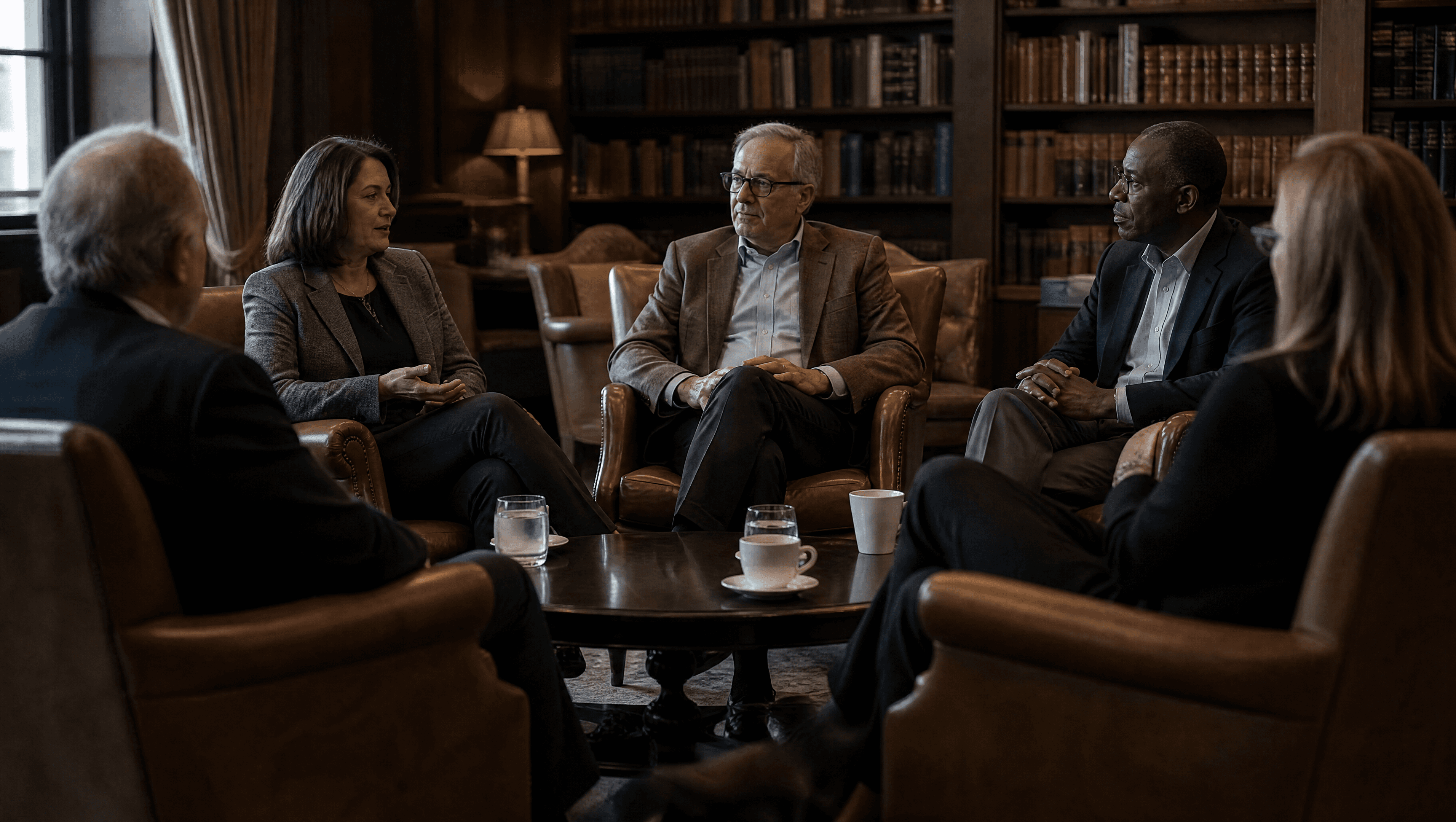

Why a PI Event is different.
Most events optimize for attendance. PI Events optimize for the list.
Custom-sourced against one brief, not a general guest roster
Highly-vetted so every seat in the room can speak to the question
Precision-matched across the parts of the system you need in the same conversation
The format is a room. The product is the invite list.
How a PI Event runs.
The dinner is simple. The list is not.
You brief the question and the mix of perspectives the room needs. Primary Insight sources the people who would actually know.
Every participant completes a qualifying interview before a seat is offered.
You run the discussion with those experts in the room. Afterward, we check whether the question was answered.
If it was not, the work does not close.


PI Events vs. other solutions.
A call is the default. Use an event when the brief needs more than one expert and less than a crowd.
Use a PI Call when one currently active expert can produce a decision-ready answer.
Use a PI Meeting when the nuance will not surface on the phone.
Use a PI Event when you need targeted people around one question in the same room.
Use a PI Survey when one conversation cannot map the sector.
Where teams use PI Calls.
"They do not just send a list of names and ask us to figure it out. The team understands the profile we need and keeps narrowing until someone actually fits."
Portfolio Manager
~$30B Hedge Fund




FAQ
When should we use an event instead of a call, meeting, or survey?
Use a PI Event when one voice is not enough and a survey is too flat. You need targeted people around one question, in the same room, disagreeing while it is still useful. A PI Call is the default when one currently active expert can produce a decision-ready answer. A PI Meeting is the upgrade when the nuance will not surface on the phone. A PI Survey is for pattern across a sector. An event sits between those tools. It is not a larger call. It is not a smaller survey. It is a controlled room. Book the event when the brief needs friction from different parts of the same system: customers and operators, clinicians and administrators, channel and brand, local operators in more than one seat of the value chain. Book it when you need to hear where the market agrees and where it splits before a theme becomes consensus. Book it when a polite transcript would be a wasted night. Do not book an event because a dinner feels more senior than a call. Attendance is not the product. If the question can be settled by one precision-matched expert, use the call. If you need scale without conversation, use the survey. If you need the floor or the site, use the meeting.
Who is in the room?
PI Experts. Custom-sourced for the brief. Highly-vetted before a seat is offered. Precision-matched so the mix in the room can actually work the question. A lot of people carry the expert label and can talk about an industry or a company. Far fewer have the accurate, nuanced insight that drives better decisions when capital is on the line. Events hide that problem behind atmosphere. The table looks full. The conversation stays polite. You leave with color. The decision stays open. Primary Insight builds the list against the agenda, not against who is easy to host. About 70 percent of experts are sourced new for the specific request. Every participant goes through a qualifying interview. Knowledge and fit are confirmed. Then the mix has to be right. A room of six similar former executives is still one voice with more glasses on the table. You want people who still work in different parts of the same system and will disagree in a useful way. That is the point of the format. Primary Insight does not fill seats to make the night look expensive. The invite list is the product.
How does a PI Event actually run?
You brief the question and the perspectives the room needs. Primary Insight sources those people. Each one is qualified. The discussion happens. Afterward we check whether the question was answered. That is the PI Standard applied to a room. Phase one is the work nobody sees: defining who belongs at the table, custom sourcing, qualifying interviews, and briefing participants so they understand the agenda before they sit down. Phase two is the event. That conversation is yours. Phase three is the debrief. Did the room resolve the issue you came for? If it did not, the file does not close because dinner was served. The team goes back to the brief. Sometimes the next step is a second, tighter room. Sometimes it is a PI Call with one person who emerged as the missing seat. Sometimes it is a PI Survey once you know which pattern you still cannot see from conversation alone. Most events optimize for the night. PI Events optimize for the list and the follow-through. The format is a room. The product is actionable insight.
What if the event does not answer the question?
Then it is not done. A completed event is not a completed question. A good room can still leave a piece open. You may learn where the market splits and still need one operator in one geography to settle the mechanism. You may get strong customer color and still need a specialist on reimbursement, implementation, or supply. After the event, Primary Insight checks whether you have what you came for. If you do not, sourcing continues against the remaining question. The Answer Commitment applies here the same way it applies to calls and meetings. The work does not end because the calendar hold ended. This is also how you keep events from turning into theater. If the first list was close but not right, do not host a broader night to compensate. Tighten the brief. Source the missing seat. Use the format that fits the leftover question. Primary Insight is not in the business of filling rooms. It is in the business of answering the question the room was built for.
How do you handle compliance at events?
The same way it is handled on calls and meetings: as an operating requirement, not a disclaimer on the way out. Every participant is briefed on the boundaries of appropriate discussion before they sit down. Confidential, proprietary, and inside information are not the point of the night and are not to be solicited. A PI Event is for industry knowledge, operating reality, and current market mechanism. It is not a shortcut around what your institution cannot discuss. Primary Insight has operated to an institutional standard for 20+ years, with a record of institutional-grade compliance and zero infractions. Developed inside Bear Stearns in 2005, retained by JPMorgan, and still run for teams that cannot treat a private dinner as an informal exception to the rules. The qualifying interview is part of that control. The wrong person in the room is both a research problem and a risk problem. If your legal or compliance team needs process language, documentation, or a clear description of how participants are screened and briefed, that is part of the engagement. A controlled list is easier to keep inside the lines than a wide guest roster. That is one more reason the invite list is the product.
Do we need a large commitment to host an event?
No. Start with the room the brief requires. You do not need a series, a conference slate, or a minimum number of nights to request a PI Event. If the question needs targeted people around one agenda, that is the brief. The same matching, qualifying, and compliance standards apply whether this is a single working session or part of a broader program. Teams over-buy events the same way they over-buy travel. They assume a premium firm should be hosting rooms on a cadence. Cadence without a question produces atmosphere. Use an event when one voice is not enough and a survey is too flat. Use a call when one expert can settle it. Add the next room only when the first one creates the next brief. Primary Insight is a quality-focused expert network for institutional decision-makers. 800,000+ consultations. 2,700+ client organizations. Clients and experts active on six continents. The firm can support ongoing programs of calls, meetings, events, and surveys. It does not require you to buy a calendar of dinners to get one controlled room. Bring the question that needs friction. Request the trial. See whether the list produces actionable insight or just a finished night.
